

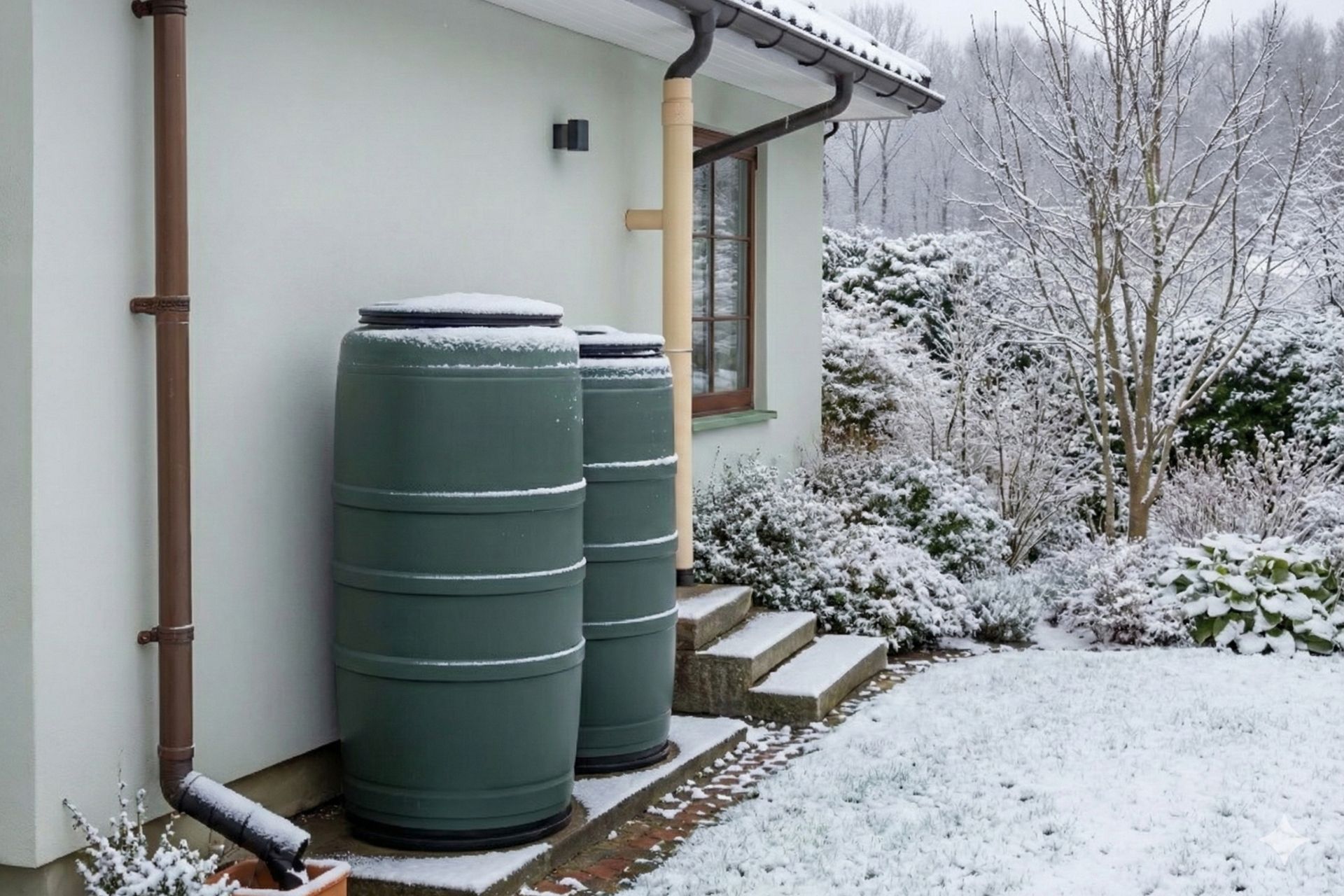
The garden might be slowing down, but November often brings with it the season’s first serious frosts. For property owners and dedicated gardeners, this poses a clear and costly risk: burst pipes and damaged water butts.
Protecting your outdoor plumbing and rainwater harvesting systems now is one of the most practical and preventative maintenance tasks you can complete this autumn. A few hours of preparation can prevent hundreds of pounds worth of damage, ensuring your valuable stored water remains safe and your pipes stay intact until spring. We’re here to give you the expert advice on how to lock down your water assets safely and efficiently for the winter season.
🥶 The Clear and Present Danger of Ice Expansion
The reason winterising water systems is crucial comes down to simple physics: water expands by about 9% when it freezes. This force is powerful enough to split even the toughest metal and plastic pipes, leading to leaks, bursts, and significant damage when the spring thaw arrives.
This late autumn period, with its fluctuating temperatures, is actually the riskiest. A warm day followed by a sharp overnight freeze can catch many people unprepared. Here is your essential checklist for tackling exposed pipes and fittings.
Outdoor Tap and Hose Safety Checklist
- Disconnect Everything: Immediately disconnect all garden hoses, timers, and spray nozzles from your outdoor taps. Any water trapped in these items can freeze and cause pressure to build up back at the tap connection.
- Drain Hoses Completely: Coil your hoses and ensure they are fully drained. Store them indoors or in a dry shed/garage.
- Isolate the Tap: If possible, turn off the water supply to your outdoor tap using the internal isolation valve (usually located near the main stopcock or where the pipe enters the wall).
- Open and Drain: Once isolated, open the outdoor tap fully to drain any residual water from the pipe. Leave the tap open slightly to allow for any minor pressure release during winter.
- Lagging is Key: Insulate any exposed pipework using foam pipe lagging. This simple, affordable step provides excellent protection against severe cold.
🛢️ Protecting Your Harvest: Greenshredder Slimline Water Tanks
You’ve spent the year collecting precious rainwater—a sustainable resource perfect for gardening. November sees some of the highest rainfall volumes in the UK, making it a crucial month for topping up your stores. However, that stored water must be protected.
The design of a Greenshredder Slimline Water Tank makes it perfect for discreet placement against a wall, but this position also exposes the connections to cold.
The Water Tank Winter Protocol
The approach you take depends on how cold your area gets and whether you need to use the water during winter.
- Managing Extreme Frost Risk (Recommended):
The safest way to avoid damage is to partially drain the tank. Water freezing inside a tank is rarely an issue for the tank itself (unlike rigid metal pipes), but it can damage the fittings and pumps.
- Create Expansion Space: Drain the water down until the tank is about 75% full. This leaves room at the top for surface ice to expand without putting pressure on the container walls or lid.
- Drain the Tap and Overflow: Ensure the tap at the bottom of the tank is drained. If you have a pump or filter connected, remove and drain these components completely and store them in a frost-free location.
- Insulate Connections: Wrap the downpipe connection and any external valves leading to the tank with appropriate outdoor pipe insulation.
- The Year-Round Conservation Advantage
Our slimline tanks are designed for maximum capacity with a minimum footprint. By keeping them operational and insulated during the rainy autumn, you capture vast amounts of water that would otherwise be wasted. This reserve will be your secret weapon against spring and summer droughts, making you a more efficient and sustainable gardener.
🔧 Protecting Your Mobile Equipment
While you’re winterising your fixed assets, don’t forget the machinery and accessories that help you move water and materials around the property. If you have a wheelbarrow or garden trolley, the cold and damp can cause trouble for standard tyres—deflation and cracking are common problems.
If your garden tools rely on pneumatic tyres, November is the perfect time to upgrade to Greenshredder Flat Free Tyres. They require no air, won’t split, and remain perfectly usable even after being left outside in the damp for months, offering guaranteed mobility when you need it most.
Taking these simple preventative measures now—from draining the hoses to insulating your Greenshredder Slimline Water Tank connections—will guarantee an easy start to the next growing season. You’ll avoid frustrating breakdowns, preserve your machinery, and ensure your water reserves are protected. Visit our shop to find all the sustainable garden equipment you need to stay ahead of the UK winter.